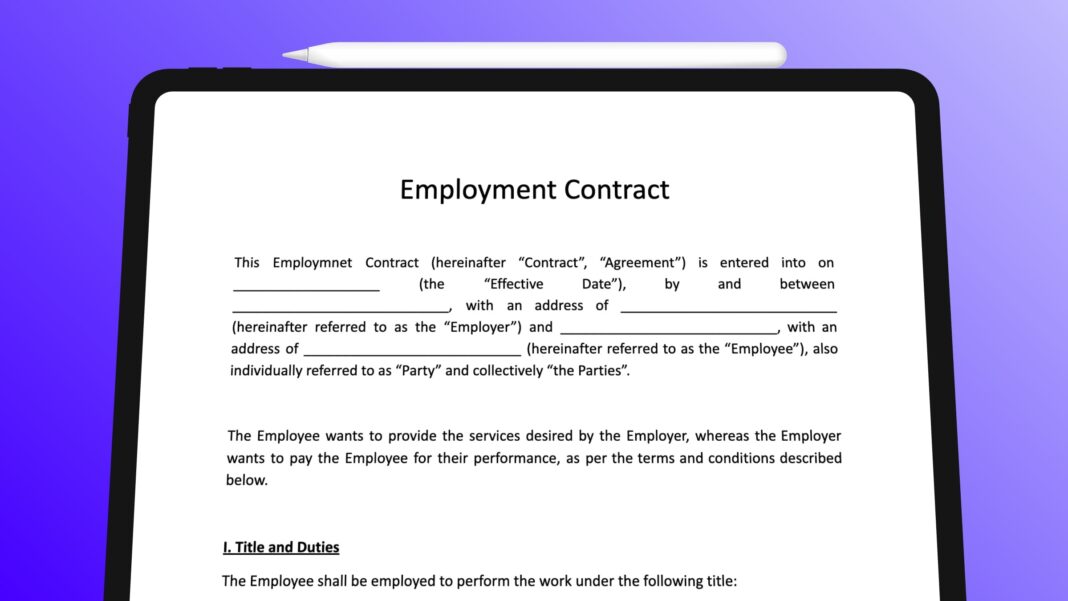
When bringing new employees into a business, the focus often falls on onboarding, training, and settling someone into the team.
However, one of the most important documents in this process is sometimes rushed or overlooked: the employment contract.
A well-drafted employment contract does more than formalise the relationship between employer and employee.
It serves as a vital legal framework that protects both sides and sets a clear standard from the outset.
Clarity from the Start: Why Employment Contracts Matter

Clear expectations form the backbone of any productive working relationship.
From outlining duties and responsibilities to confirming pay, hours, and leave entitlement, an employment contract removes ambiguity and reduces the likelihood of disputes.
For businesses, using a reliable employment contract template ensures consistency and minimises risk.
This becomes particularly important when adapting to changes in employment law, such as those involving flexible working or statutory holiday calculations.
An employment contract should not be treated as a box-ticking exercise.
It defines critical details including notice periods, probation terms, benefits, and clauses around confidentiality.
These elements can prove essential if an employee moves on or if any disagreements arise.
By setting terms clearly at the beginning, employers and employees both have a shared understanding of what is expected.
Templates Offer Structure Without the Hassle
Smaller companies or those without an in-house HR team often find it difficult to keep up with employment law.
Drafting individual contracts from scratch for every new hire can be both time-consuming and inconsistent.
A strong employment contract template removes this pressure, offering a solid starting point that can be tailored when needed.
Templates provide a dependable framework that supports compliance with current legislation.
Employers using a professionally developed template are more likely to avoid legal oversights.
For example, Simply Docs offers an extensive range of employment documents including a useful employment contract template that can be adapted to suit different job roles and levels of seniority.
Customising Without Complicating

The idea of a contract template might sound rigid, but most are designed with flexibility in mind. Employers can adjust clauses to reflect working hours, remote working options, or industry-specific policies.
What remains consistent is the structure and clarity that a good template provides, making the onboarding process smoother and more professional.
Relying on a credible template also means benefiting from legal expertise without needing a dedicated solicitor.
As long as the template is reviewed regularly and updated to reflect legal developments, it remains a valuable tool for maintaining compliant employment practices.
Professionalism Begins with the Basics
First impressions matter, and the contract a new employee receives on their first day often speaks volumes.
A well-structured employment contract shows that a company takes its responsibilities seriously. It signals transparency, reliability, and good organisational standards.
For businesses looking to stay compliant and consistent, using an employment contract template is a smart, time-saving approach.